
EXCLUSIVE - Artist Interview Luis Humberto Navejas from Enjambre
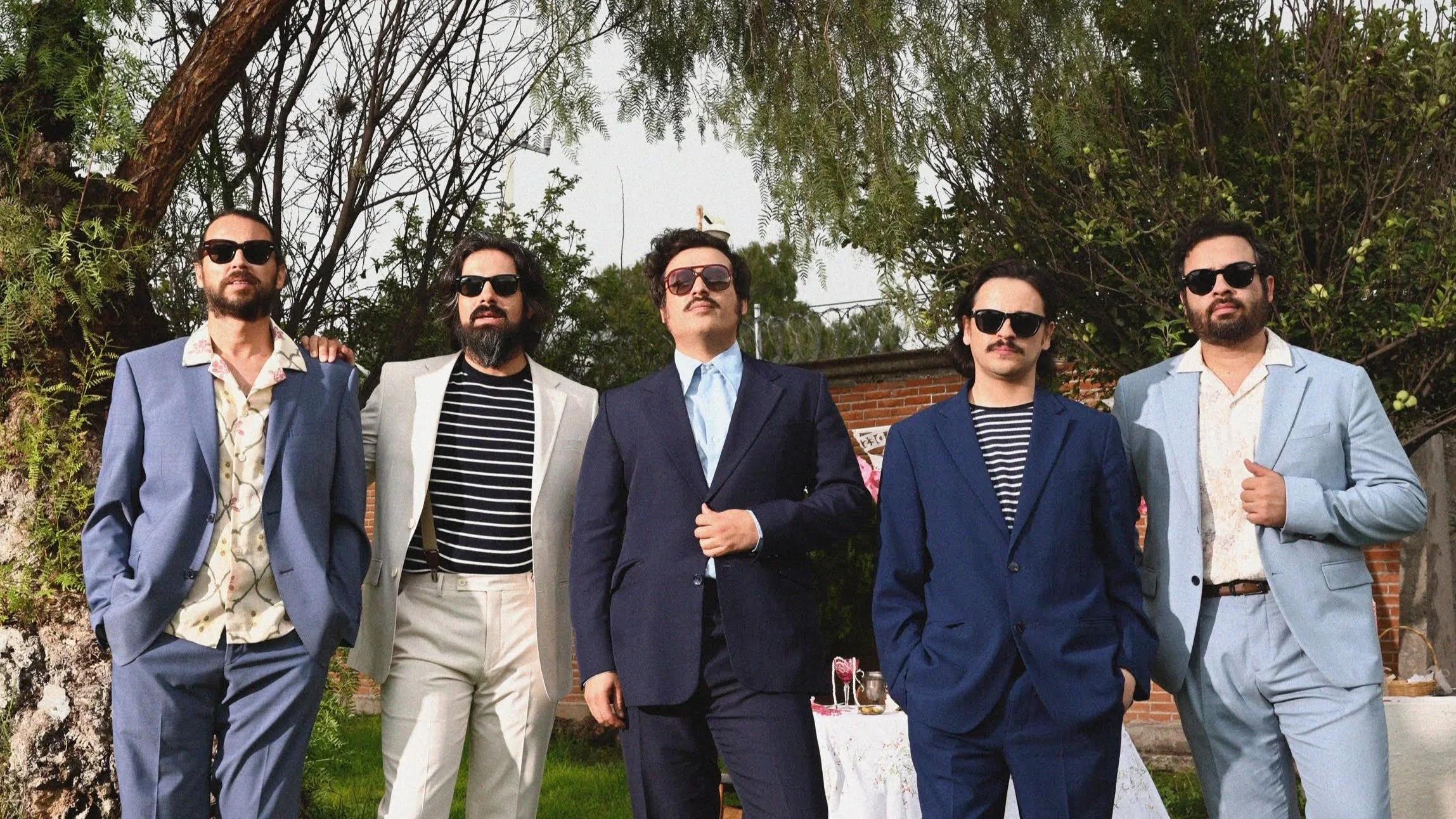
Enjambre - Photo credit: Eric Buccan Live photo by Liliana Estrada
-Brandon Mendoza
I had the opportunity to speak with Luis Humberto from Enjambre and share a conversation about his process, feelings about his upcoming US tour and more. Read the full interview below.
BRANDON: To introduce myself, my name is Brandon Mendoza, Soy Fotógrafo. Thank you, Es un honor, to be able to have this conversation with you, and I really appreciate your time.
LUIS: I'm Luis Humberto Navejas, the singer of Enjambre, and it's a pleasure, thanks.
BRANDON: Thank you, yeah. I guess, primero que nada, we can start by kind of introducing the tour, "Daños Luz." I know that you guys have been on it in Mexico already, so this is opening next week, I believe, is the start of the US leg of the tour. How does the band feel? ¿Cómo se siente la energía?
LUIS: Well, it's been a really good tour. We don't have the album out quite yet, but we've been putting out song by song, and people have been receiving it with a lot of love, and they're really digging it. So, probably by the time we're on tour, we'll have another couple of other songs out. So, we're excited to play new stuff, and excited to come back to... to go back to the States and just play all the new stuff, and some of the favorites, and really happy to promote our new record in a different place other than Mexico.
BRANDON: Yeah, yeah, I think a lot of people end up being surprised, especially viéndolo desde México que hay tanta gente latina acá en los E.E.U.U. They don't realize that a lot of us came up, and where there's work, that's where we're gonna be. So, there's a lot of different communities here in the US where sí hay público.
LUIS: Yes, yes, this is probably like the fifth or sixth consecutive year that we go to the States [for] the tour, and I, myself, lived in the States for a chunk of time—a good chunk of time—for the same reasons, you know, work and stuff. So, I totally identify with these people. I consider myself one of you guys, you know, because I... we've all been there in the band. The band actually started as Enjambre in Southern California. So, it's a pleasure to come back, and it's also home for us. So, it's really nice to go back and bring something from Mexico to our fellow Latinos in the United States. And each time we go, I mean, we always have a blast, and it's all because of the audience. So, it's really exciting that we're gonna go back.
BRANDON: Yeah, yeah, I think I had seen a couple of your interviews as well preparing for this. So, it was in Anaheim, right, where you started? And you've been doing, in Enjambre I mean, you as a person have been, and your family have been performing for so long now.
One of my questions, I guess, is how do you go about the writing process and making it still feel fresh, even throughout all the time that it's going? I know that for your previous project, you guys kind of experimented con como un sonido estilo bolero. So, throwing a little bit more acoustics in there, that's a way that you guys can keep it fresh, but are there any other resources that you go to?
LUIS: Well, I guess the way we approach it is not thinking on bringing something fresh, per se, but life itself, day to day, brings you fresh things. So, we're always affected by what's going on around us. And also, I mean, in a personal matter, mostly, but also whatever's going on in society affects our writing. And I guess that's what keeps it fresh. And we hope that it is, you know, I mean, because we do like to bring new stuff and to project another angle of the band.
And like you said, we've been doing it for quite some time now. So, it's really important for us to not repeat ourselves, especially since we've been doing so much music for so long that everything we've put out there is relevant to us in regards to our era. So, that's, I guess, what's going on. Now, the other record that you were talking about, that was our version of "Enjambre Unplugged." So, we just didn't do it with MTV, but that was our acoustic record. So, we always had that itch to do that. And that was like the time do it. And it was a really great experience, but it was time to get back to the electric stuff. So, we're really excited about that.
BRANDON: But at the same time, I feel like having an experience like that, and putting out a record where you work, where you have to kind of shift your sound—también for the future—it allows you to, for new records, kind of implement some of those resources and kind of play around. It kind of changes the way of thinking. Do you think that that's something that you guys have experienced as a band?
LUIS: Definitely, definitely. I mean, you probably wouldn't notice much of a change, but there's new toys that we can play with. We learned so much from that record, from those sounds and that style of music, that now we're implementing just little details. Nothing so obvious or so purist. It's just different kinds of harmonies, different instruments, a better understanding of rhythm. It's very subtle, subtle things, but yeah, it was a learning experience and it's reflected on our new stuff, definitely.
BRANDON: Do you guys feel like you have a method for how you come up? You spoke a little bit before about just experiencing life and that influences you to create the music, but also is there a method where, for example, you have the melody that comes for a song? Is it the lyrics always that come first, or does it change depending on the songs for you?
LUIS: It varies. A lot of times there's just this little sound that's there in my head. I record it now with the smartphones, you can do with the voice notes. So I have a bunch of voice notes (vocalizing) and then I just grab the guitar and just explore if it's gonna go anywhere. So that's one way to do it.
If there's a phrase or rhyme or something that just pops into my head, I'll write it down as well. And sometimes I keep these archives of different melodies and different rhymes and stuff. And sometimes I just kind of look around and put things together. Some other times I'm just sitting there and it just comes—lyrics and music at the same time. Or sometimes I'm just feeling something and I have to sit down and write the whole thing and I just mount some music onto it that accentuates the feeling of what I wrote.
So there are different avenues on how to get there. So it's all really interesting and fun and it gets better once I bring it to the band and we all workshop it together. And then they listen or they find things that I didn't. So that's what makes it a band. There's that unity and that teamwork because I can come up with an idea or a feeling, but these guys, they know how to play their instruments and they know harmony and they understand how I think and how I feel. They understand words in the written form and the singing form as well. So it's a really beautiful process when we are putting those things together and it's different almost every time.
BRANDON: Yeah, and I would assume for the new project in the past, I mean, Enjambre has a lot of kind of key... how would you call it? Like themes. Nostalgia is like one of them. At least from my experience, at least that's what I perceive.
LUIS: Definitely, yeah.
BRANDON: You speaking to how you come up with them definitely resonates. I can see how that would lead to that. I think I personally really relate to that too. One of the reasons why I love the music so much is because I feel like... I mean, I've been a very nostalgic person for a very long time. So it's always cool to see how different people, you know, kind of express that.
I've always had this idea that if you're one of the lucky people that has the ability to express yourself, you kind of have a duty to, especially in the creative field. You know, not everyone has the ability que le llegue la letra or that they come up with this tangible, shareable experience. The human condition is very complicated and we all go through it and not everyone has that skill set. So do you think that that's something that you think about while working on the songs, or is it just, you just feel what you feel and you're putting it into the record and then you hope that it resonates with people?
LUIS: Yeah, I mean, nostalgia is not a theme per se but it's something that's present in many things of our songs. And it's not something that I do consciously. You know, the reason why I started doing this whole thing is because I am a fan of music and the reason why I listen to music is because it makes me feel something. So that's the only thing that I'm interested in when it comes to music, either listening to it or making it. It needs to make me feel something whether it's my song or someone else's song. So that is my... you know, that's my premise. That's where it all starts.
I'm trying to express a feeling and a lot of times, you know, some things are just like, you know, sad and or longing for something that's no longer there or it would have been nice if it would have been there. But we always think about other things too. People just resonate with those more. And it's awesome, you know, we love every song that we make. So that's been an interesting thing. It seems like not only Mexicans, but other Latinos, you know, we're very warm-hearted people. So it makes sense that they like going to our shows and sing those songs like, you know, with their hearts out and stuff.
So, you know, we... I just wanted to make rock and roll songs but this is us being honest and we always tend to go that route. We're more melodic, you know, more, I guess, romantic, melodically speaking. So, you know, it's part of our DNA too. And we like it, you know, it's part of it.
BRANDON: Yeah, yeah, that's amazing. I think that's a very key part of it. I guess to kind of shift topics a little bit, but kind of going on that, coming back to your process... because I understand that as a creative, we have this like, this idea where you're in kind of "flow state." Do you... I don't know, I guess to kind of describe that is essentially this state of existence where you're kind of just like completely fulfilled with your creation and what you are.
When I first started like my journey, I paint, I do a bunch of different stuff. But I think one of the things that drew me towards it was that feeling of kind of just being completely fulfilled with your creation. You kind of lose that connection with who you are and your ego and you kind of just become your product, like whatever it is you're making, your feeling. Do you relate to that while you're making your music?
LUIS: I mean, I might. I just never think about it that way. I just do what I do and I enjoy it and I feel relief. I feel purged. I feel satisfied. I don't know if I go through those depths of thoughts that you go through, like... that's your thing.
BRANDON: It's a little abstract. It's just this feeling of like, you don't think about food, you don't think about sleeping. You kind of, you just...
LUIS: I think about food all the time, man. I sleep and I eat. I don't know. Your process is cool and I respect that. I just, I express myself the best way I can and I enjoy doing it and I feel satisfaction. And I really love working with my bandmates and our crew also, on the road crew. So it's just like, I do feel fulfilled. So I need to do it again and do some more.
BRANDON: Yeah, yeah, that's really... I guess I'm just curious to see how everyone's process works. But yeah, so you have a new single out, I believe, I was told February 3rd or 4th, is that correct?
LUIS: Yes, we're gonna put out a new single. We've been putting out... oh, it's on the fifth. Okay, yes, thank you, thanks. I didn't even know. But yeah, it's a new song from our new record, "Daños Luz" and we're putting out song by song. So this is another one from our track list.
BRANDON: Awesome, yeah. So I'm happy to see you guys come to the US again. Do you have any words for the fans here in the US? I'm gonna be working the Seattle show. So I'll see you guys there at the Nectar Lounge. I know that you guys also have a bunch of them already sold out. So I'm excited to see you guys here. And any words for the fans out here?
LUIS: Yeah, yeah, totally. Nectar Lounge is awesome. Seattle is amazing. I'm really happy that I have fellow Mexicans and Latinos living there that are gonna go to our show. And more, if more people are interested or invited now, there's not a lot of tickets left because it's almost [a] sold out show. So run and grab your ticket, can't miss out on this show. It's gonna be a cool experience. So I highly recommend it. Enjambre, Seattle, Nectar Lounge, 13th of February.
BRANDON: Awesome, man. Thank you so much. Muchas gracias. Luis Humberto, es un honor, así que gracias por el tiempo.
LUIS:Muchas gracias a ti carnal, es un placer haber platicado contigo.
Watch the full interview on our Instagram page.
